The thoughtful traveler’s guide
Travel Pillow Buying Guide: Size, Fill, and Care for the Road
A good travel pillow earns its place in your bag by doing two things well: taking up little room and making rest feel a little more familiar. The right choice depends on where you are headed, how you like to sleep, and what kind of support feels comfortable once the journey begins.
Cabin seats, car headrests, and unfamiliar guest beds ask different things of a pillow. A compact travel pillow can provide a welcome cushion during a flight or a short pause between destinations, but size alone cannot tell you whether it will suit you. Filling, shape, cover fabric, and care instructions all contribute to the experience. This guide walks through those details, with examples from Holy Lamb Organics’ travel pillow range.
Start with the journey, not the label
“Travel pillow” can describe several different designs. Some are small rectangular pillows intended for a train, plane, car, or overnight bag. Others wrap around the neck, support the head against a seat, or use a particular contour to help prevent the chin from tipping forward. Before comparing materials, consider the kind of rest you are hoping to make possible.
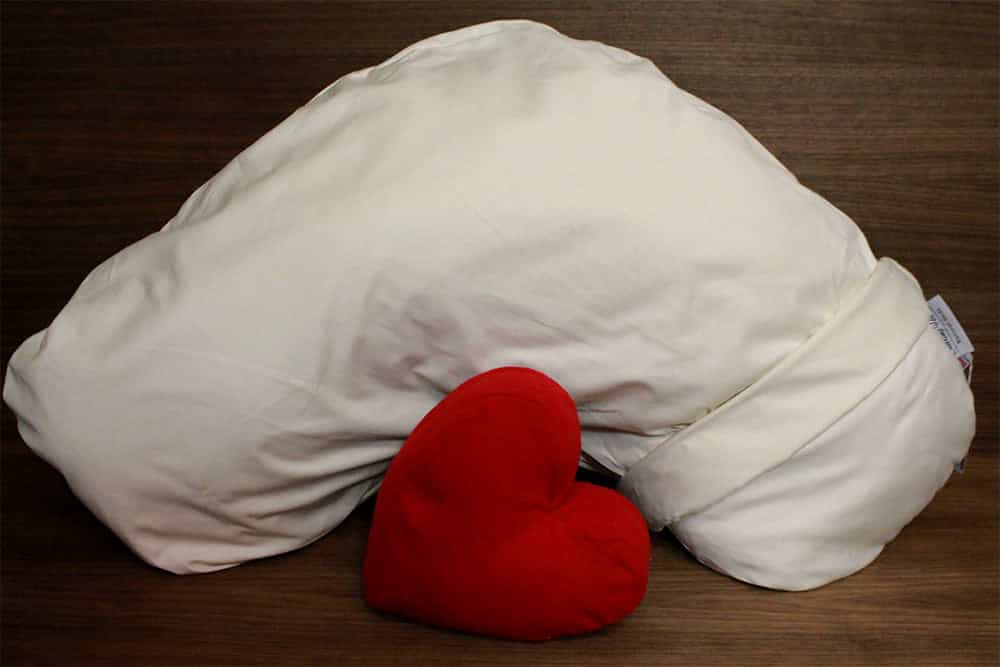
A compact rectangular pillow may feel familiar if you prefer resting your head on a conventional pillow. It can be useful for a seated nap, a hotel stay, or as a spare pillow in a guest room. A neck roll or curved cushion, by contrast, offers more localized support and may suit a traveler who wants a bolster behind the neck. A shape designed for side sleeping has different proportions again: it may be more supportive at home, but less convenient to pack.
Think about whether the pillow will live in a carry-on, a work bag, a car, or checked luggage. A few inches can make a meaningful difference when you are trying to fit a pillow alongside clothing and essentials. Equally, the smallest option is not automatically the most comfortable. The useful question is whether the dimensions offer enough surface and loft for the way you plan to use it.
- For flights and trains: Look for a manageable footprint and a shape that can be held, tucked behind the head, or placed against a seat.
- For car travel: Consider whether the pillow will sit securely against the seat and whether its thickness works with the headrest.
- For overnight stays: A compact bed-style pillow can offer a familiar alternative to an unfamiliar pillow, provided you have room to carry it.
- For occasional use at home: A travel-size pillow can double as a reading cushion, a child’s small pillow, or a spare for visitors.
Read the dimensions as part of the design
Dimensions are more than a packing statistic. They shape how a pillow supports the head, neck, and shoulders, and how easily it can be arranged in a cramped seat. A small pillow can be wonderfully portable yet feel too narrow for a restless sleeper. A larger one may offer more room to shift position, but take up space that would otherwise hold a change of clothes or a book.
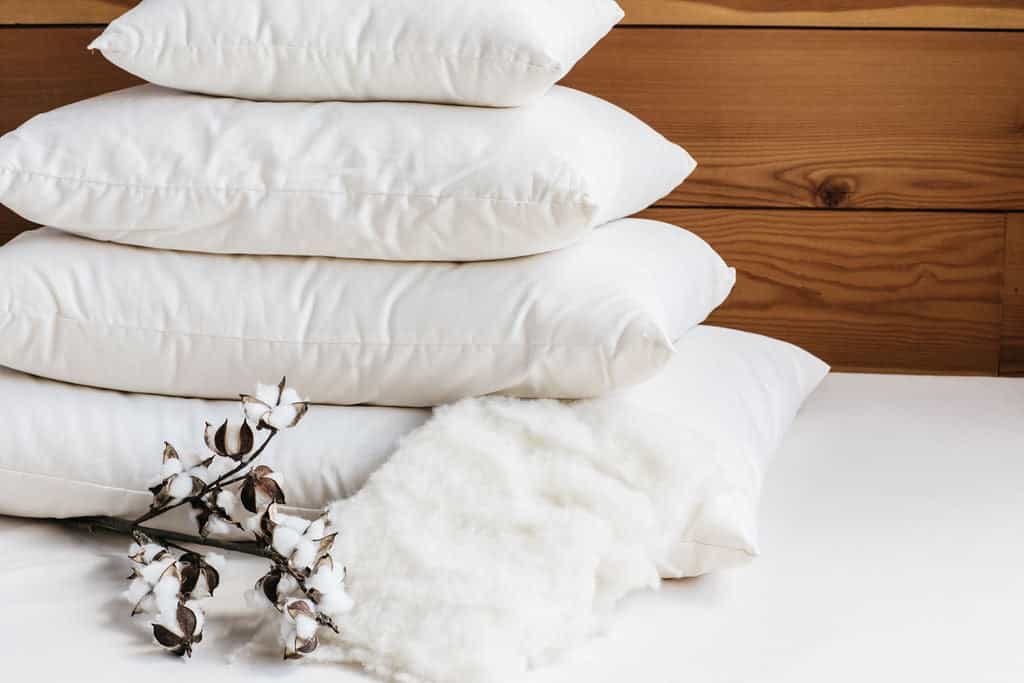
Holy Lamb Organics’ travel-sized pillows measure 12.5 by 17.5 inches. That compact rectangular format is intended to travel more easily than a full-size bed pillow while still providing a recognizable pillow surface. The All-Natural Travel Pillow uses Premium Eco Wool in organic cotton fabric; the Certified Organic Travel Pillow is filled with GOTS-certified organic wool and includes a separate organic cotton sateen case.
Those measurements offer a helpful starting point, but they do not define the pillow’s feel. Fill weight, construction, and the way the pillow compresses beneath the head matter too. If you can, compare the listed size with a pillow you already own. Measure it while it is lying flat, then consider whether that amount of surface area would feel useful in your expected setting.
For luggage, consider the pillow’s shape when packed as well as its dimensions when in use. A soft-filled pillow may compress somewhat in a bag, though repeated compression can affect its loft and should not be treated as a permanent storage method. A pillow with a separate case may also be easier to protect from the rest of your luggage. Check whether the case is included, whether it can be washed separately, and whether additional cases are available.
Choose a fill for its feel and upkeep
Fill is the quiet architecture of a pillow. It influences softness, resilience, loft, and the care routine you will need to follow. Natural materials are not interchangeable: wool, latex, and kapok each have distinct properties, and two pillows made from the same broad material can still feel different because of their construction and amount of filling.
Wool: springy, breathable, and carefully maintained
Wool fill has a resilient, gently yielding character that differs from the sinking softness of some loose synthetic fills. It is often chosen for its breathability and its ability to manage moisture, though individual comfort depends on the pillow’s loft, density, and the sleeper’s preferences. Some travelers appreciate the familiar, natural feel; others may prefer a softer or more moldable filling.
Holy Lamb Organics’ travel pillows use wool with organic cotton fabric. The all-natural version is filled with Premium Eco Wool, while the certified organic option is described as containing GOTS-certified 100% organic wool. These are specific material distinctions worth checking when shopping: “natural” and “certified organic” are not identical claims, and certification applies according to the product’s stated details.
Wool pillows generally call for a more careful routine than a pillow whose entire construction is machine washable. The travel pillow itself should be spot cleaned, while its separate case can be machine washed according to the care guidance. This arrangement can make routine freshening easier without putting the wool-filled interior through a wash cycle.
Latex: resilient support with a different profile
Natural latex is known for a more responsive, shape-retaining feel. In pillow designs, it can provide firmer support than loose fiber fill, depending on the form and construction. Shredded latex may allow adjustments to loft, while a solid core tends to have a more defined profile. Latex is not the fill described for Holy Lamb Organics’ travel-size pillows, but it can be a useful comparison if you are exploring natural bedding materials more broadly.
Because latex products have their own cleaning and storage requirements, read the manufacturer’s instructions before choosing one for frequent travel. Some are spot clean only, and certain covers may be removable while the core is not washable. A supportive feel is only one part of the decision; care and portability should suit your habits too.
Kapok: light and plant-based
Kapok is a plant-based fiber with a light, airy character. It may appeal to travelers seeking a non-animal fill, but the right choice still comes down to the individual pillow’s support and care directions. A pillow’s filling may be adjustable, but that feature is most useful when there is a practical way to handle and store any removed fill. Do not assume that “natural” means washable or maintenance-free.
Across all fill types, check the product description for the exact material, whether the fill is certified, and which components can be cleaned. A clear care label is part of the product’s design, not an afterthought.
Consider the cover as part of your travel kit
The cover is the layer that meets your face and the surfaces around you. On the road, it also helps shield the pillow from suitcase interiors, seat fabric, and the small spills that can happen during a long trip. A separate washable case is a practical detail: it can be removed for cleaning without washing the pillow’s filling.
Holy Lamb Organics’ travel pillows are paired with separate organic cotton sateen cases. The certified organic option describes the shell and case as organic cotton, with the cotton grown in India and milled in a GOTS-certified facility in Pakistan. If textile sourcing or certification is important to you, read the product information closely and distinguish between the material of the cover, the material of the fill, and the certification stated for each.
In a travel setting, a case can also serve as a simple barrier between the pillow and other belongings. Pack it in a clean compartment or reusable bag, especially after use. If you often travel, consider whether a spare case would make your routine easier: one can be in use while another is being washed. Avoid assuming a pillow’s inner cover is removable unless the product details explicitly say so.
Fabric preferences are personal. Some travelers like the smooth hand of sateen; others may favor a more textured cotton. Breathability, softness, and how the fabric feels against your skin are worth weighing alongside the product’s specifications. If you are sensitive to particular fibers or finishes, review the full materials list and consult the maker with questions before purchasing.
Care that fits real travel
A travel pillow is most useful when its maintenance feels manageable. Before buying, ask what happens after a long journey: can the case be washed at home, does the pillow require spot cleaning, and can it be refreshed without elaborate equipment? These answers may help distinguish an appealing product from one that fits your actual routine.
For Holy Lamb Organics’ travel pillows, the stated guidance is to spot clean the pillow and machine wash the separate case in cold water. The certified organic travel pillow’s case guidance specifies a gentle cold-water wash, followed by line drying or tumble drying on low. Check the instructions supplied with the item, since product care details can vary and the manufacturer’s current guidance should take precedence.
- Protect it in transit. Keep the pillow in a clean, breathable bag or case when it is not being used. This limits contact with dirt and keeps it separate from toiletries or damp clothing.
- Wash the case, not the fill. Remove the separate case if the design allows it, then follow its label. Do not put a wool-filled pillow in a washing machine unless the manufacturer specifically directs you to do so.
- Spot clean with restraint. Address small marks according to the maker’s instructions. Avoid saturating the pillow; excessive moisture can be difficult to remove from an interior fill.
- Dry completely. Before packing the pillow away, make sure any cleaned component is thoroughly dry. Storing damp textiles can lead to unwanted odor or deterioration.
- Give it room to recover. After unpacking, let the pillow air in a dry, well-ventilated place. Follow any specific refresh instructions provided with the product.
Wool may have a natural scent when new, and product descriptions note that this can dissipate with use. If you notice a scent, allow the pillow to air as directed rather than applying fragrance sprays or strong cleaning products that may not suit the material. For persistent concerns, contact the manufacturer for advice rather than improvising a treatment.
Match the pillow to your sleeping position
Sleep position influences what kind of support feels comfortable, even during a short rest. A back sleeper may want enough loft to cushion the head without pushing it too far forward. A side sleeper may need more height to bridge the space between the shoulder and head. Stomach sleeping often calls for a flatter feel, though personal preference and the seat or surface can change what is comfortable.
Travel pillows are not a substitute for an ergonomic assessment, and no single shape works for everyone. If a pillow leaves you uncomfortable, its size or fill may not suit the way you are resting. Try it in the setting where you expect to use it, when possible, and pay attention to how your head and neck settle rather than relying only on a product’s description.
Specialty designs can be tempting, particularly if you already know what kind of support you prefer at home. But a shaped pillow that works beautifully in bed may be cumbersome in a small carry-on. For a travel-specific purchase, prioritize the balance between usable support and practical transport. If you want a compact rectangular option for an overnight bag, compare its measurements with your luggage and consider whether you can carry it externally or secure it to a bag.
A concise buying checklist
Before settling on a travel pillow, use this checklist to move from appealing description to informed choice:
- Use: Will it be used on a flight, in a car, in a hotel, or for several purposes?
- Dimensions: Does its size offer enough support while fitting the luggage you actually carry?
- Fill: Do you prefer wool’s spring, a more resilient latex profile, or a light plant-based fiber?
- Cover: What is the fabric made from, and is a separate case included?
- Care: Can you spot-clean the pillow and wash the case in a way that suits your routine?
- Certification: Are organic or other material certifications stated clearly, and do they apply to the components you care about?
- Packability: Will it fit inside your bag without displacing something more essential?
- Comfort: Does the shape match your sleeping position and preferred level of loft?
The considered choice
The best travel pillow is rarely the one with the most elaborate claims. It is the one whose dimensions, feel, materials, and care instructions make sense together—and whose place in your bag feels justified once the journey is underway. A compact pillow can help create a familiar point of comfort away from home, but it should also be easy enough to protect and maintain.
Holy Lamb Organics’ travel pillow range offers a clear example of what to compare: a 12.5-by-17.5-inch format, wool filling, organic cotton fabric, and a separate washable case. The All-Natural Travel Pillow and Certified Organic Travel Pillow share a compact purpose while differing in how their wool is described and certified. Reviewing those details alongside your own preferences will help you decide whether either is a practical companion for your next trip.
Make the decision with the journey in mind. A pillow that fits your bag, supports the way you rest, and comes with care instructions you can follow has the quiet usefulness of a well-chosen travel essential: considered, personal, and ready to go.